 Lupos Dış Ticaret
Demand for LED lighting products continues to grow across Türkiye in construction, commercial lighting, factories, and retail spaces. For Turkish distributors, procurement teams, and serious SMEs, importing LED panels from China represents a high-stakes commercial operation. While the price-per-unit in hubs like Shenzhen or Guzhen is attractive, the actual "landed cost" in Turkey is determined by regulatory discipline, not just the factory invoice.
At Lupos Dış Ticaret, we don't just "source" products. We execute safe, compliant, and profitable import operations from China to Turkey. Many companies researching Çinden Led Panel Getirmek approach the process as a simple purchase, but it must be managed as a formal, highly regulated import project. This guide breaks down the 2026 reality of Çinden Led Panel İthalatı to help you avoid the common pitfalls of customs blocks, supplier fraud, and TAREKS rejections.
1. Supplier Verification and Avoiding the "Sourcing Agent" Trap
China dominates the global LED lighting supply chain, offering competitive pricing, wide product variety, and custom OEM/ODM capabilities. However, a major risk is supplier authenticity. Online directories are filled with trading companies, resellers, and fraudulent entities posing as factories. Furthermore, many Turkish companies lose money by working with unauthorized "sourcing agents" or Alibaba sellers who promise low prices but disappear the moment a container gets stuck in customs.
Before transferring funds, strict due diligence is required. Lupos Dış Ticaret operates as your accountable operator. We verify the factory's Chinese business registration and export license, confirm their true production capacity, and perform on-site pre-shipment inspections (PSI) to ensure you are dealing with a legitimate manufacturer, not a high-risk middleman.
2. The Critical First Step: GTIP Classification
One of the first technical steps in any import project is correct customs classification. Everything in Turkish customs starts with the GTIP (Gümrük Tarife İstatistik Pozisyonu) code. For LED panels, this is not a suggestion—it is a strict legal declaration. Most LED panels fall under HS Code 9405.11 or 8539.51, but the exact sub-breakdown determines:
- The base Customs Duty (Gümrük Vergisi).
- Additional Customs Duties (İlave Gümrük Vergisi - İGV) applied to Chinese origins.
- Whether the product triggers strict TAREKS (Product Safety) inspections.
- Surveillance (Gözetim) price thresholds that can artificially inflate your VAT base.
Incorrect GTIP declarations lead to customs disputes, heavy administrative penalties, or severe shipment delays. We ensure classification is verified legally before the purchase order is ever finalized.
3. TAREKS and CE: The Compliance Gatekeepers
You cannot simply bring LED panels into the country without passing the TAREKS system. As of 2026, the Ministry of Trade has tightened digital inspections for electrical goods. Turkish customs authorities will inspect these products heavily due to strict safety regulations.
CE Marking is mandatory, but a logo stamped on a carton is useless without technical proof. You must have a complete technical file ready for upload to TAREKS, which includes:
- LVD (Low Voltage Directive) & EMC (Electromagnetic Compatibility): Proving electrical safety and non-interference.
- RoHS: Certification that internal components are free of hazardous materials.
- Valid Declaration of Conformity: Traceable directly back to the actual manufacturer.
- Accredited Test Reports: Reports must come from laboratories recognized by Turkish authorities. "Fake" or copied certificates from Tier-3 factories are the number one cause of seized shipments at Ambarlı or Mersin ports.
4. Customs Valuation and Surveillance (Gözetim)
Turkish customs monitors the unit price of LED imports very closely. If your declared price per kilogram or per unit falls below the Surveillance (Gözetim) threshold set by the Ministry of Trade, you face two choices:
- Pay VAT and duties based on the higher "official" surveillance price, significantly increasing your landed costs.
- Apply for a Surveillance Document (Gözetim Belgesi), which requires a highly transparent and complex audit of your company's financials and the overseas manufacturer's costs.
Serious importers must calculate their profit margins based on these thresholds before ordering to avoid unexpected financial hits during clearance.
5. Logistics and Step-by-Step Import Execution
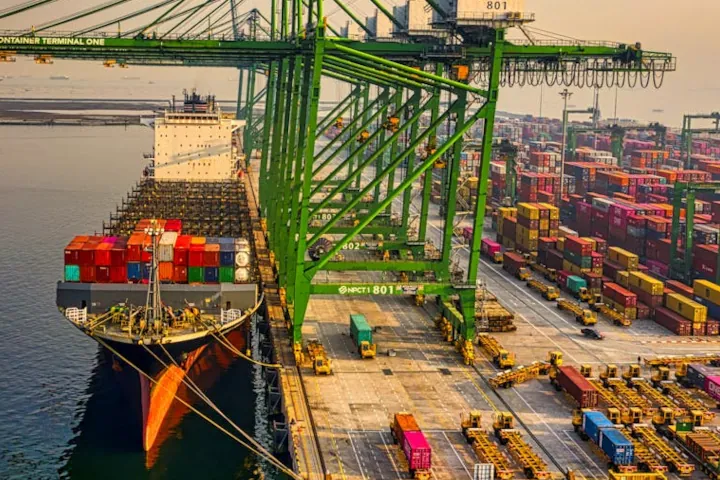
LED panels are typically shipped by sea freight. Depending on your volume, you will use LCL (less-than-container-load) or FCL (full container load). Proper packaging is critical to prevent the fragile panels from shattering during transit. A structured import approach ensures the process is handled securely:
- Supplier Audit: Physical verification of the factory in China.
- Sample Testing: Flying a "Golden Sample" to Turkey for technical review before mass production.
- Document Alignment: Ensuring the Proforma Invoice, Packing List, Bill of Lading, and CE certificates are 100% consistent. Freight terms (FOB, CIF) must be clearly defined.
- Logistics & Customs Clearance: Coordinating container loading and managing the TAREKS upload the exact moment the vessel departs.
Frequently Asked Questions (FAQ)
Is there an additional tax on LED panels from China?
Yes. In addition to standard VAT (KDV), LED panels from China are almost always subject to İlave Gümrük Vergisi (İGV). The exact rate fluctuates depending on your precise GTIP code and the current import regime decrees.
Can I import LED panels without a CE certificate?
Absolutely not. Electrical lighting products are strictly regulated. Without a valid CE Declaration of Conformity and supporting accredited test reports, the goods will be rejected by TAREKS and must be re-exported or destroyed at the importer's expense.
What is the risk of "Under-Invoicing"?
Extremely high. Turkish customs uses a risk-based scoring system. If your invoice value is suspiciously lower than market averages or surveillance thresholds, you may face a "Red Line" physical inspection, resulting in heavy fines, delays, and a permanent red flag on your importer record.
How long does the import process usually take?
Typically 60–90 days total. This includes 20–30 days for factory production, 35–45 days for sea freight from major Chinese ports to Türkiye, and roughly 7–10 days for TAREKS approval and customs clearance.
Does Lupos Dış Ticaret handle the shipping?
We coordinate the entire logistics chain, but our core value is execution and risk management. We ensure your cargo is legally compliant, correctly valued, verified at the factory level, and cleared through Turkish customs without regulatory or administrative delays.
Ready to secure your supply chain? Avoid the risks of customs blocks and compliance failures by partnering with a professional operator. Contact Lupos Dış Ticaret today for a comprehensive LED panel import consultation.