 Lupos Dış Ticaret
Textile companies aiming to increase production capacity often prefer importing high-quality machinery from China. However, high-value B2B container shipments require expertise, and the process involves critical steps including supplier verification, GTIP/TAREKS compliance, CE certification, Ministry of Trade inspections, customs valuation, and logistics coordination. Lupos Dış Ticaret manages the entire process from our Ostim, Ankara office, providing firms with secure and seamless import execution.
Supplier Verification and Fraud Risk in China
Selecting the right supplier in China is critical for import security. Trading companies may appear as factories, and fake documentation is a common risk. Lupos Dış Ticaret mitigates risks through factory visits, production capacity checks, certification verification, and historical export review.
- Factory vs. trading company: request production line videos
- Export credibility: 3+ years of experience and proof of shipments to Turkey
- Certificate verification: check ISO and CE documents via QR codes on the manufacturer’s site
- Review references and previous export records
GTIP Classification and Tax Risks for Textile Machinery
Textile machinery falls under Chapter 84 of the GTIP. Examples: weaving machines (8446.21), knitting machines (8447.12), cutting machines (8451.50). Incorrect GTIP declarations can lead to additional excise duties up to 20% or anti-dumping taxes. China-origin products are strictly monitored, and a Ministry of Trade supervision certificate may be required. Lupos provides GTIP consultancy to ensure full compliance.
TAREKS and Ministry of Trade Inspections
Scope of TAREKS
Textile machinery may be subject to TAREKS (physical control at import), especially for sensitive electronic or automated components. Preliminary online applications allow risk analysis; shipments flagged red may be blocked.
Supervision and Additional Taxes
Under Turkey’s Import Regime, a supervision certificate is required for Chinese textile machinery, and additional import taxes (5–20%) may apply. Lupos minimizes risk with pre-analysis and required applications.
CE Certification and Technical Compliance
Compliance with EU and Turkish standards, particularly for automated machines, must be proven with CE marking (2006/42/EC Machinery Directive). Fake certificates are common; Lupos conducts on-site verification. Import without CE is rejected at customs, and TSE approval may cause delays. Required documents: Technical File, User Manual, Risk Assessment.
Logistics, Shipping, and Customs Procedures
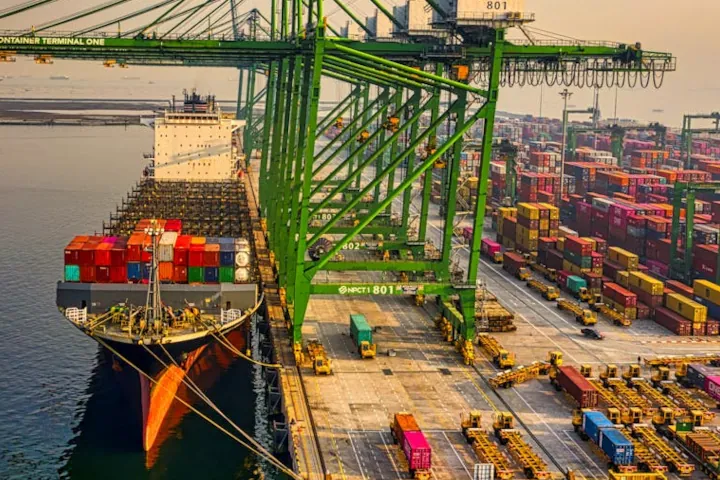
As textile machinery is usually shipped in containers, logistics planning is critical. Lupos clarifies FOB/CIF terms, adds insurance, and prevents demurrage for deliveries to Ankara OSTİM. For customs, the Import Regime must be followed with complete declarations, including Importer Declaration Form (İBF) and EK-1 documents, correct customs duties, and VAT calculation.
- Container-based transport and cargo insurance
- Risks from over- or under-valued customs declarations
- Complete submission of İBF and EK-1 forms
- Management of Ministry of Trade and TSE inspections
Full Import Process Steps
- Pre-analysis of GTIP/TAREKS and application for supervision certificate
- Supplier verification and collection of CE documentation
- Purchase agreement and proforma invoice approval
- Container booking and customs declaration preparation
- Arrival inspections by Ministry of Trade/TSE and release of payment
- Delivery and post-import support (warranty, spare parts)
Frequently Asked Questions (FAQ)
What is the most critical step in importing textile machinery from China?
Selecting the right supplier and ensuring GTIP/TAREKS compliance. Incorrect choices can cause customs delays and financial losses.
Is CE certification mandatory for textile machinery?
Yes, if the machinery falls under the Machinery Directive. On-site verification is necessary to avoid fake certificates.
Can machinery without TAREKS registration be imported?
No, products without TAREKS registration are rejected or penalized at customs.
How is GTIP determined?
Chapter 84 GTIPs (e.g., 8446 weaving, 8451 cutting) are used as reference. Lupos classifies products correctly to eliminate extra tax risk.
How long does a TAREKS inspection take?
Green channel: 1–2 days; red channel: 7–15 days. Pre-application can achieve ~80% green channel rate.
Are anti-dumping duties applied?
Yes, Chinese textile machinery may face 10–30% anti-dumping taxes. Check the current Import Regime.
Is shipping insurance required?
Yes, container shipments of high-value machines must be insured to minimize risk.
What services does Lupos Dış Ticaret provide in this process?
We handle supplier verification, GTIP/TAREKS checks, CE certification tracking, logistics, and customs, enabling firms to import safely and seamlessly. Contact us.